

How We Do It
We’re building a membership-based ecosystem where affordable access meets sustainable production: farm-fresh produce, responsibly raised livestock and fish, and education/trade programs that train and uplift communities.
By embedding ourselves into every dimension of health and wealth, we create a virtuous cycle: members get value, communities gain stability, and we all get a model that delivers both impact and returns.
Around 13.5% (18 million homes) of US households, live with food insecurity.
The average annual price for a child in care reached over $13,000 in 2024.
Open positions for skilled trade jobs are projected to reach over 600,000 across multiple sectors.
A stable, fed, trained, and supported community is economically unstoppable.
What this means is simple: too many people are locked out of health, wealth, and opportunity because access to the systems that support them—safe food, affordable childcare, meaningful trade work—is fragmented, unaffordable or simply unavailable.
Families don’t need handouts, they need systems that stop forcing them to choose between healthy food, stable work, safe childcare, and financial survival.
When these systems are integrated, communities grow.

Main Revenue Generators
Individual, Community, and Business Memberships
From our satellite childcare centers to our farm, we seek to meet the needs of every family, one household at a time. Our members will enjoy access to every internal affiliated program or service. A membership will offer access to discounts on items sold by through the farm, and childcare, education, and trade services. We aim to reduce your overall expenses across multiple areas of your life to give you the most value for your dollars.
Farm-to-Consumer Produce, Livestock, and Fish
Nutritious and sustainably produced year-found production of essential crops that deliver balanced, health, fresh foods directly to your front door. From your weekly meat needs to a variety of herbs, spices, vegetables, and fruits that you can be certain are safe and responsibly-farmed. Community members can enjoy pre-made homecooked meals with their fresh meat and produce orders.
Education & Trade Services
Through partnerships with organizations and individuals skilled in diverse trades, we will offer:
low-cost trade services provided by partners paired with students learning trade
professional networking opportunities and the essential hands-on experience to be competitive candidates in today's job market
We aim to increase access to affordable services, improve the employment prospects of community members, and provide affordable pipelines to work that offers families financial stability.
Memberships
Maximize your savings by enrolling in memberships that offer invaluable access to services, such as:
-
Scheduling Services -
-
Childcare Short-Term (8hrs or less), Childcare Long-Term (8-48hrs), Childcare Temporary (3-90 days), Childcare Permanent (90+ days, School or Calendar Year, Intermittent Schedules)
-
Trade Services
-
Family Counseling
-
Financial Counseling
-
-
Advance ordering of fresh produce, meat, or fish
-
Enrolling in trade, or educational programs
24/7 Childcare Services
Available when you need it, as long you need it, as often as you need it.
No questions asked.
Services will include short and long-term, permanent, and temporary housing options.


Farm-To-Consumer Produce, Livestock, and Fish
OPEN DOORS ACRES, LLC FARMING TECHNIQUES
Aquaponics
Produces:
-
edible fish species such as tilapia and catfish
-
leafy greens, herbs, and some fruiting crops
Aquaponics reduces water use by up to 90%, requires no synthetic fertilizers, and creates both plant and protein outputs—making it a powerful tool for community food security and education
Drip-System
Produces:
-
tomatoes
-
cucumbers
-
peppers
-
eggplants
Drip hydroponics allows precise control of water and fertilizer inputs, reducing waste and increasing production.
Nutrient Film Technique (NFT)
Produces:
-
lettuce
-
kale
-
spinach
-
Bok choy
-
herbs
NFT is one of the most efficient for leafy greens, offering more produce with minimal water. Its low input requirements make it a cost-effective solution for community food programs and small farms.
Research & Development
Research into sustainable food and energy production through an environmentally conscious lens allows us to shape a world where advancement does not cost us our health and wellbeing. Instead, we aim to give the next generations the relevant knowledge for innovation today.
Vertical Gardening
Produces:
-
leafy greens
-
microgreens
-
strawberries
-
herbs
Vertical systems maximize limited space, making year-round farming possible even in areas with zoning barriers, limited land access, or high population density. They are ideal for community centers, schools, or onsite farm-to-consumer installations.
Delivery & Meal Service
Activities:
Door-to-Door
Farmers Market
Restaurant, schools, catering events
Donation to those in need
Community Events
Surplus is sold through affordable memberships to offset costs and improve access to vulnerable populations such as the elderly.
Livestock
Including:
Cows
Chickens
Lamb
Goats
Sheep
Horses
Pigs
Used for:
Petting zoos
4H participation
Educational opportunities
Direct-to-Consumer Sales
Membership boxes to offset program costs
Education/Tours
Education builds confidence, self-sufficiency, and entrepreneurship pathways.
Together with our educational partners, we can streamline access to opportunities.
Hydroponics is the science of growing plants without soil by delivering water, nutrients, and oxygen directly to the roots.
Instead of relying on land quality or weather, plants grow in a controlled, efficient environment that produces more food, more reliably, and with far fewer resources than traditional farming.
For The Spare Keys Project, hydroponics is more than a modern farming tool - it’s a pathway to food security, job training, sustainability, and community care all in one system.
🌱 Why Hydroponics Matters Today
Across the country, families are struggling with rising food costs, unstable access to fresh produce, and food deserts that make healthy meals nearly impossible.
Hydroponic growing is one of the fastest-growing agricultural solutions because it creates local, year-round food production even in rural or low-resource settings.
Because hydroponic systems don’t depend on weather or soil, they are resilient to:
-
Drought
-
Flooding
-
Temperature extremes
-
Soil contamination
-
Supply chain failures
-
Rising grocery prices
Hydroponics gives communities control over their food supply — and that’s the foundation of true stability.
How These Systems Support Our Mission
All these systems create a resilient, flexible model that can thrive in almost any environment.
For The Spare Keys Project, that means:
-
More year-round food for families facing food insecurity
-
Hands-on education for youth, adults, and workforce trainees
-
Reduced operational costs through water and energy efficiency
-
Opportunities to create hyper-local farm-to-consumer programs
-
Resilience to supply-chain disruptions, extreme weather, and inflation
Our future farm will use these systems to grow fresh produce for our residents, childcare centers, and community partners, support local households, and build long-term sustainability.
Hydroponics is not just a farm system; it is a catalyst for stability, nourishment, education, and long-term resilience.
🧑🏫 Workforce Development & Education
Hydroponics is perfectly aligned with the long-term vision for skill-building.
It teaches:
-
Botany & plant science
-
Sustainability & resource management
-
Equipment operation
-
Data tracking & environmental monitoring
-
Food safety certification
-
Farm-to-table logistics
-
Small business / entrepreneurship skills
Education & Trade Services

Innovative Education Programs
We believe that strong communities start with strong educators.
Our programs provide teachers, trainers, and community leaders with the tools, resources, and practical experience they need to deliver hands-on, future-ready education in agriculture, trades, and sustainable practices.
We support educators by offering:
-
Professional development in modern farming, aquaponics, and trade technologies
-
Curriculum resources that integrate real-world applications into classroom learning
-
Collaborative spaces where teachers can exchange best practices and innovate new approaches
-
Flexible, diverse schedules that extend learning beyond the traditional 8-hour day, allowing educators to reach students at times that work best for their communities
By equipping educators with knowledge and infrastructure, we extend the impact of our programs far beyond our farm.
Every teacher empowered becomes a multiplier, inspiring students and communities to adopt sustainable practices, embrace self-sufficiency, and contribute to local economic and environmental resilience.

Farming Education and Community Gardening
Education shouldn't be confined to a classroom. It should grow from the soil up.
Our farm-based programs teach participants of all ages the skills needed to cultivate food, raise livestock, and manage aquaponic systems, creating hands-on experiences that prepare students for careers in agriculture, trades, and sustainable business.
Beyond technical skills, our community gardening initiatives transform neighborhoods into living classrooms.
Residents gain access to fresh, nutritious food while learning how to build and maintain sustainable green spaces. These gardens serve as a blueprint for resilient infrastructure, showing communities how to integrate renewable practices, local food production, and self-sufficient systems into daily life.
By combining education, agriculture, and community engagement, we empower individuals while seeding long-term sustainability that extends far beyond our organization—fostering networks of knowledge, resources, and resilience that ripple throughout the community.
Community Workforce Development
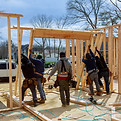
We pair licensed professionals with students in hands-on, community-based training. When a resident requests service, whether a car repair or a home fix, we answer the call with a supervised training team. The work is done by a certified tradesperson, while students learn directly on real jobs.
Residents receive:
-
Faster service
-
Reduced fees
-
Reliable community support
-
The opportunity to help train future tradespeople
Students receive:
-
Paid, real-world experience
-
High-value certifications
-
A support-focused learning environment
-
Direct pathways to employment
It’s not just workforce development—it’s a model of practical education, community support, and economic resilience, all woven together.
Together, we shorten wait times, lower costs, expand opportunity, and rebuild a skilled workforce our communities can count on.
Funding Insights
Startup Costs Breakdown
Our first phase centers on the launch of Open Doors Acres, LLC as a community-focused food source. The farm is the heart of our vision, providing a foundation for sustainable revenue that will fund future initiatives. The sooner we begin operations, the faster we can scale and expand our services to support those in need. We will start with small-scale vertical, NFT, and drip systems, enabling us to produce a variety of fresh, nutritious crops within a compact footprint while establishing ourselves as trusted providers in the community. Alongside this, a small, diverse herd of livestock will allow us to develop a healthy breeding pool for future expansion, ensuring that the highest quality meat products come from the healthiest animals. *The figures provided are estimates and may not reflect the final costs of the project. Hydroponic Equipment & Supplies - $30,000* Livestock - $5,000* Land Acquisition/Infrastructure - $65,000* Operating Expense - $5,000* Licensures, accounting, and insurance - $6,000* Marketing & Outreach - $5,000* Other Miscellaneous Farming Equipment - $15,000* Contingency - $15,000* Total Cost of startup is estimated to be $135,000 - $150,000*. With our plan to organically grow, we expect to break even within the first year. Our goal is to reach 200 families within the first three months of full operation, providing them ultra-affordable produce. We plan to expand to consistently provide produce and meat products to over 2,000 families within 12 months and donate 500lbs of fresh produce to organizations that disperse food to those in need.
Revenue Projections Year 2+
Microgreens
Extremely high-value crop
Revenue potential: $20,000–$60,000 per year*
Eductaion and trade Services
School tours
Workforce development programs
Hands-on classes & workshops
Farm-to-table event partnerships
Revenue potential: $5,000–$25,000 per year, depending on programming*
Tomatoes, Peppers, Cucumbers
Fruit crops can yield 6–10x more per sq ft than soil
Revenue potential: $10,000–$40,000 per year*
Produce Delivery & Meal Services
School, Restaurants, business partnerships
Hands-on cooking classes & workshops
Event Catering
Estimated potential: $25,000–$100,000 per year, depending on programming*
Leafy Greens & Herbs
Heads of lettuce: $1.00–$3.00 wholesale / $3.00–$5.00 retail
Yield: 30,000–70,000 heads per year
Revenue potential: $40,000–$150,000 per year*
Mission-Driven Services
Childcare Services
Memberships
Community Events
Revenue Potential:
$50,000 -150,000 per year, depending on programming*